
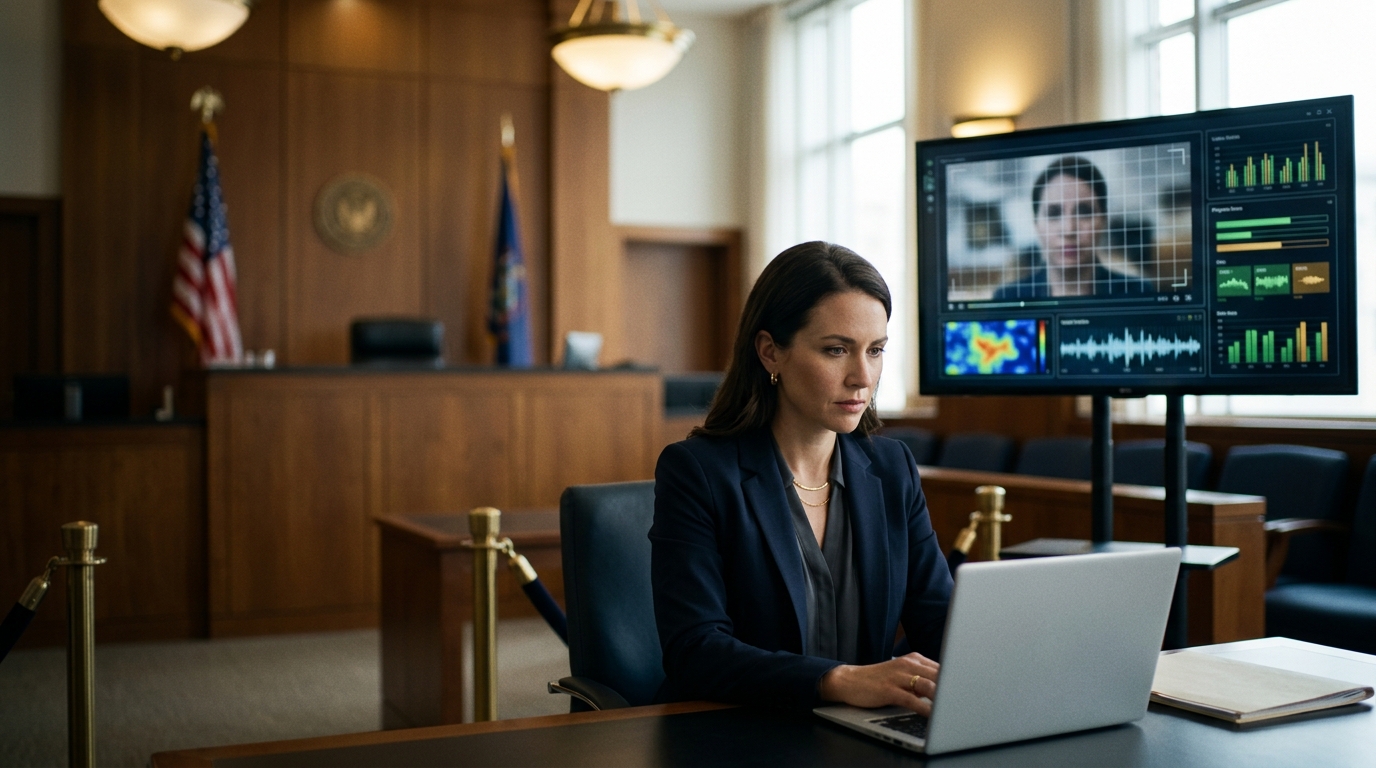
Digital evidence has always played an important role in criminal cases, but artificial intelligence is changing what lawyers, judges, and defendants may need to question. A video can be enhanced by software, a voice recording can be cloned, facial-recognition software can suggest a match, and an AI system can generate an analytical conclusion that appears scientific even when no human expert explains how the system reached it.
That does not mean every digital file is unreliable. Courts increasingly must separate genuine evidence from fabricated material and distinguish investigative leads from proof reliable enough for a jury. In 2026, federal rulemakers are actively studying machine-generated evidence and deepfake authentication.
City Law Guide provides general legal education, not legal advice. Evidentiary rules and criminal procedures can vary by jurisdiction, so anyone facing a criminal charge should obtain advice based on the court and facts involved.
Why AI Is Creating New Questions About Criminal Evidence
Artificial intelligence can enter a criminal case at many stages. Police may use facial recognition or analytics to develop a lead. Prosecutors may use software to organize large collections of digital evidence. Defense lawyers may receive AI-enhanced images, summarized records, or machine-generated conclusions. Courts may then be asked to decide whether those outputs are relevant, authentic, reliable, and fair to place before a jury.
The basic rules remain. Federal Rule of Evidence 901 addresses authentication, Rule 702 governs expert testimony, and Rule 403 allows courts to exclude relevant evidence when specified dangers substantially outweigh its value. The harder question is how those standards apply when the important “witness” is software.
Deepfakes Make Authentication More Complicated
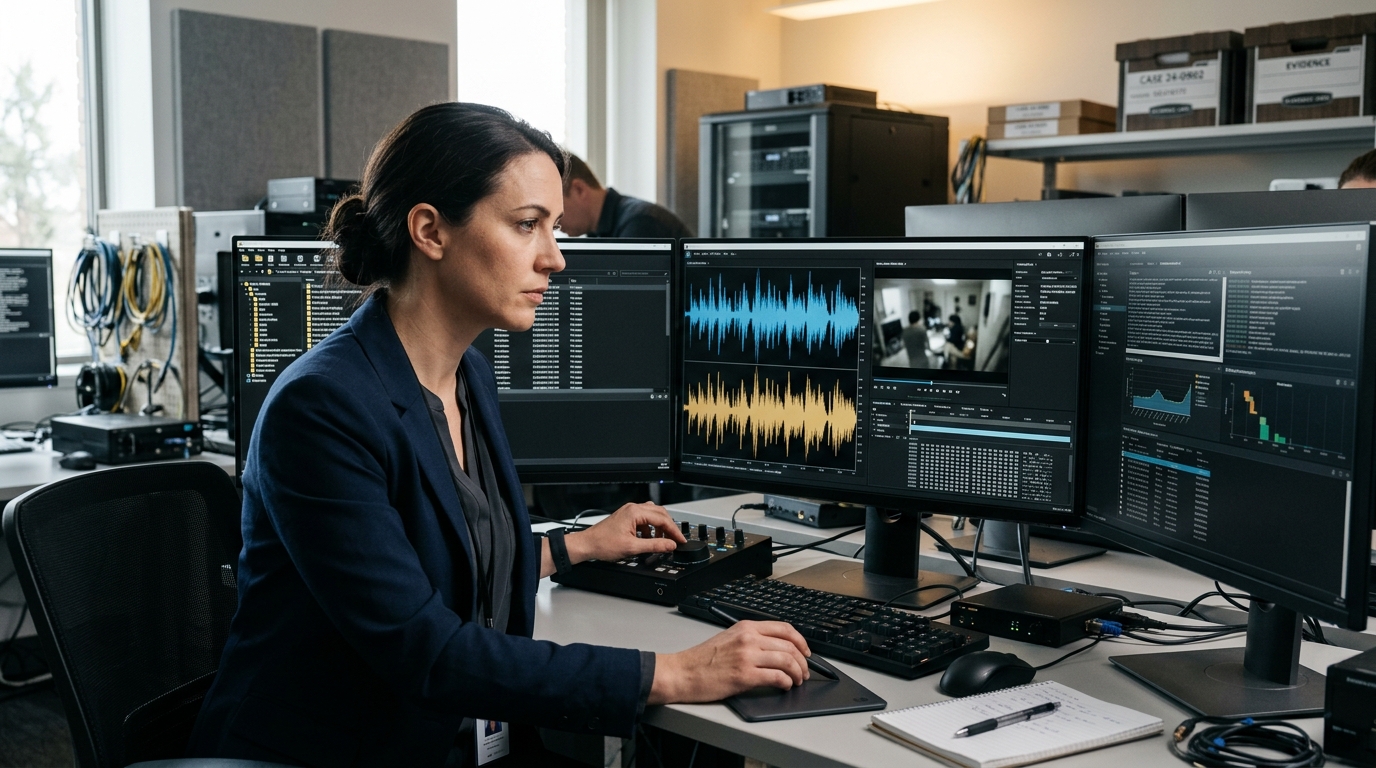
Deepfakes can create realistic audio, photographs, and videos depicting events that never occurred. At the same time, the existence of deepfakes creates a second problem: a person can claim that genuine evidence is fake. Courts therefore need a way to take legitimate fabrication concerns seriously without turning every photograph or recording into an expensive forensic dispute.
The federal Advisory Committee on Evidence Rules studied this problem in 2026. A Federal Judicial Center survey discussed by the committee received responses from 931 federal trial judges, and only 15 reported that they had encountered a deepfake challenge. Among judges who had not encountered one, most said they would expect an opponent to make some initial showing before requiring a deeper authenticity inquiry. That suggests the issue is emerging, but it is not yet routine in federal court.
Rule 901 Still Starts With Authentication
Under the current federal framework, the party offering an item generally must produce enough evidence to support a finding that the item is what that party claims it is. A witness with knowledge, distinctive characteristics, technical information, or evidence about a process or system may help establish authenticity.
A deepfake allegation does not automatically make a recording inadmissible. A meaningful challenge may focus on inconsistencies in the file, questionable provenance, missing original data, unexplained editing, metadata, chain-of-custody problems, or expert analysis suggesting manipulation. Courts may also consider testimony from people who created, received, stored, or witnessed the original material.
For more general information on criminal proceedings, readers can visit the Criminal Defense category or the Legal Topics hub.
A Proposed Deepfake Procedure Is Still Being Studied
In 2026, the Evidence Rules Committee considered a draft Rule 901(c) designed specifically for evidence alleged to have been fabricated by generative AI. The draft approach would not allow a party to trigger a full deepfake hearing simply by saying “this could be fake.” The opponent would first need to make an evidentiary showing that fabrication is reasonably possible.
If that threshold were met, the draft would require the party offering the evidence to establish authenticity under a stronger standard before the item reached the jury. The committee debated whether such a rule is necessary, whether existing evidence rules already give judges enough authority, and whether a special rule could encourage unsupported deepfake objections. As of 2026, this remains a developing rulemaking issue rather than a blanket new rule that applies in every federal criminal case.
Machine-Generated Conclusions Raise a Different Problem
Deepfakes concern whether an item is genuine. Machine-generated conclusions raise a different question: whether an AI system’s output is sufficiently reliable. Examples could include an algorithm that identifies a person, analyzes a forensic pattern, estimates a risk, or produces a conclusion that would ordinarily require specialized human expertise.
The distinction between investigative use and evidentiary use matters. Software may give police a lead without the software output itself being offered to prove guilt at trial. If the government later seeks to use an AI-generated conclusion as substantive proof, the defense may have stronger reasons to ask how the system was validated, what inputs it received, what error rates are known, whether the tool was properly applied, and whether a human expert can explain its limitations.
Proposed Rule 707 Focuses on AI Reliability
Federal rulemakers have been considering proposed Rule 707 for machine-generated evidence. The proposal grew from concern that a party might offer an AI-generated conclusion without a human expert even though the same conclusion, if expressed by a person, would normally be evaluated under Rule 702’s expert-reliability requirements.
The Advisory Committee received substantial public feedback and continued studying the proposal in 2026 rather than simply treating AI output as automatically reliable. The committee discussed requiring expert support in ordinary cases, allowing other strong validation evidence in exceptional situations, and requiring advance notice when qualifying AI evidence will be offered. It also recognized a practical problem: a machine cannot be cross-examined in the same way as a human expert.
For an official overview of the federal judiciary’s work on AI-generated and AI-processed evidence, readers can review the U.S. Courts discussion of the Federal Rules of Evidence and artificial intelligence.
How a Defendant Can Think About AI-Related Evidence
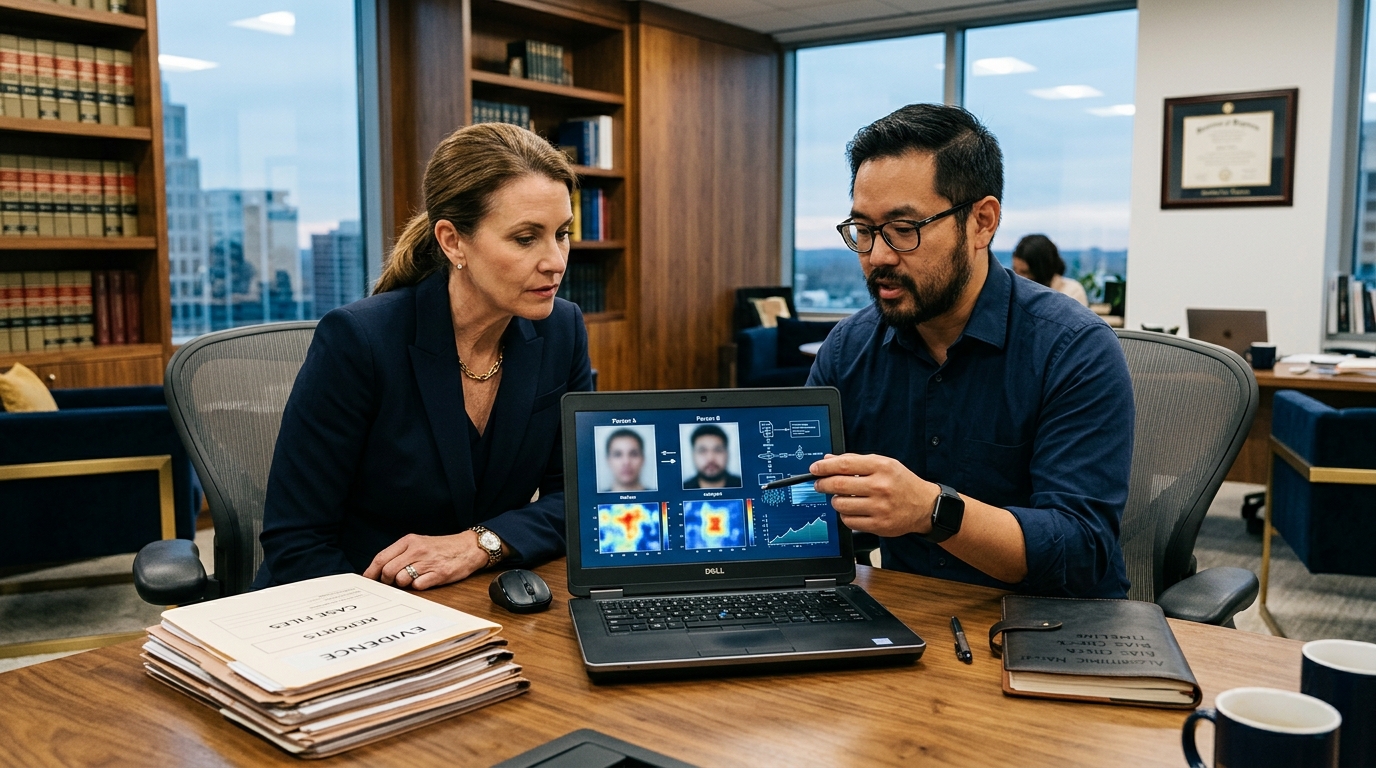
A defendant should not assume that every algorithm is biased or that every digital file is a deepfake. Unsupported accusations can distract from stronger evidentiary issues. The more useful approach is to identify exactly what technology was used, what role it played in the investigation, and whether the prosecution intends to introduce its output at trial.
Because criminal discovery rules, expert disclosure requirements, suppression procedures, and evidentiary motions vary, the timing and form of a challenge can matter as much as the technology itself. A defense attorney may need to raise authenticity or reliability issues before trial so that the court can determine what foundation is required.
Preserve the Original Files, Records, and Technical Context
When digital evidence is important, preserving the original source can be critical. Copies sent through messaging apps, social networks, or editing programs may lose metadata or be compressed. Screenshots may omit information that exists in an original device or account. An AI-enhanced version of a photograph or recording may also differ from the underlying source.
Relevant questions can include where the file came from, who possessed it, whether an original is available, whether the file was converted or enhanced, what software touched it, and whether hashes, logs, metadata, or device records exist. If an AI tool was used, the tool’s version, settings, inputs, and output may matter because different configurations can produce different results.
When Expert Review May Become Important
Some disputes can be handled through ordinary witness testimony and records. Others may require a digital-forensics or technical expert. An expert may examine metadata, file structure, compression artifacts, model performance, validation studies, error rates, or whether an enhancement process could have introduced information not present in the original.
Expert involvement does not guarantee exclusion. It can give the court a stronger basis for evaluating authenticity and reliability while allowing both sides to test technical claims. Those questions may also intersect with constitutional rights and disclosure obligations.
If a case involves disputed digital evidence, readers can explore Legal Resources, review City Legal Guides for local context, or use the Directory to research local legal professionals. For a broader look at how states are regulating artificial intelligence outside the courtroom, see 2026 State Privacy and AI Laws: What Small Businesses Need to Know.
major takeaway
The major takeaway for 2026 is that AI has not replaced the rules of evidence. Instead, it is forcing courts to apply old concepts—authentication, reliability, foundation, prejudice, disclosure, and cross-examination—to technology that can create convincing outputs at extraordinary speed. Federal rulemakers are actively considering whether new procedures are needed, but current cases still depend heavily on existing evidentiary principles and the facts surrounding the particular item or system.
As deepfakes become easier to produce and machine-generated conclusions become more common, careful documentation will become increasingly important. The strongest challenge will usually be specific: what is this evidence, where did it come from, what technology produced or altered it, how was that technology validated, and can the other side meaningfully test the result?