
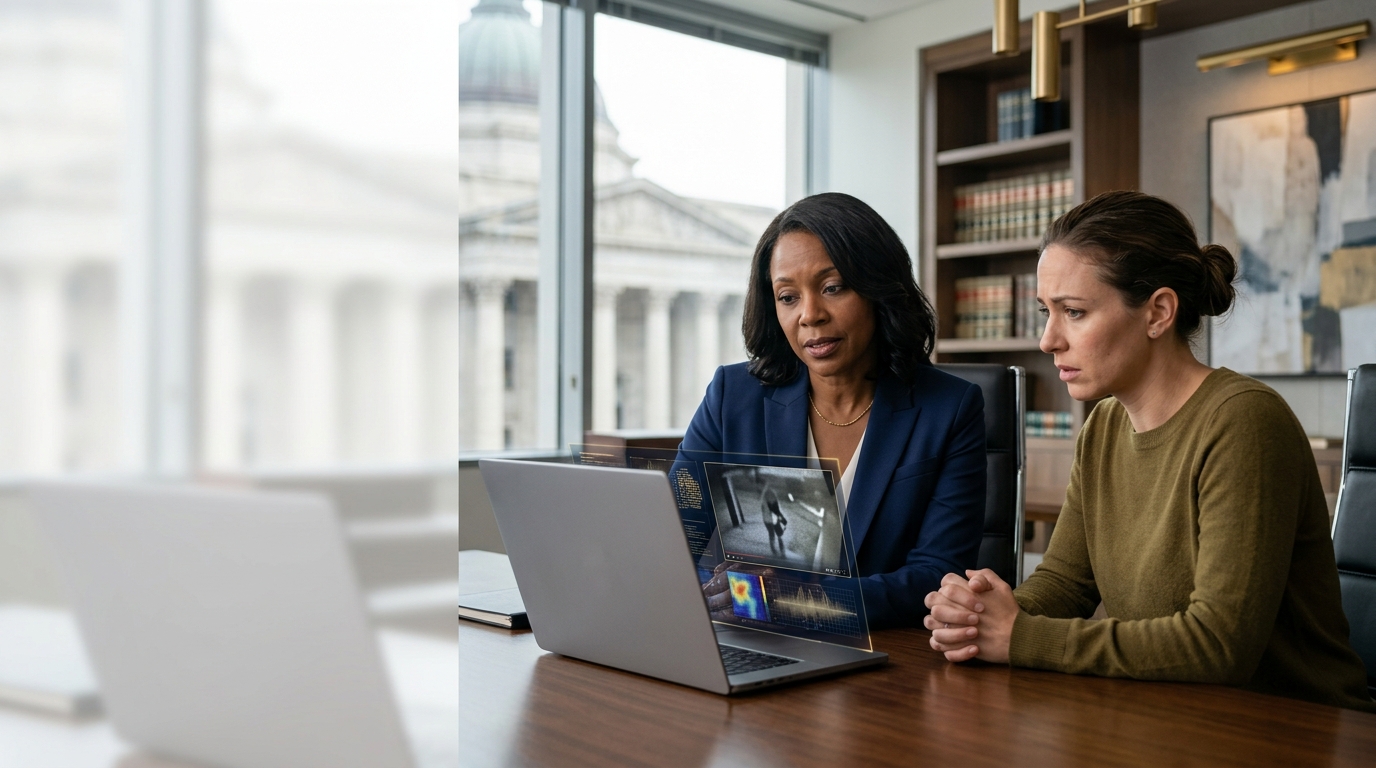
Photos, text messages, voice recordings, and videos can carry enormous weight in divorce and child custody disputes. A recording may appear to show a parent making a threat, a photograph may seem to document unsafe behavior, or an audio clip may appear to capture an admission about money or parenting. In 2026, however, families and courts increasingly have to consider another possibility: digital media may have been created or altered with artificial intelligence.
Deepfakes can imitate a real person’s face, voice, or behavior with surprising realism. They can also create a second problem sometimes described as the “liar’s dividend”: genuine evidence may be dismissed as fake simply because AI manipulation is possible. For family-law disputes, where emotions are high and evidence often comes from phones, social media, home cameras, and messaging apps, authentication is becoming more important.
City Law Guide provides general legal education, not legal advice. Family-law rules, evidentiary standards, custody procedures, and deadlines vary by state and local court. If disputed digital evidence could affect your divorce, custody case, protective-order matter, or financial dispute, consider getting advice from a qualified local attorney.
Why Deepfakes Matter in Family Law Cases
Deepfake disputes are still emerging, but family-law lawyers are paying attention because digital evidence is already common in these cases. The American Bar Association has warned that deepfakes are likely to surface in civil disputes, including family-law matters involving allegations of abuse or financial misconduct. The ABA has also highlighted technology-facilitated abuse such as deepfakes, spoofing, doxing, electronic surveillance, and nonconsensual intimate imagery as issues lawyers increasingly may encounter.
The legal question is not simply whether AI exists. A court still needs to decide whether a particular item is authentic, relevant, reliable, and admissible under the rules that apply in that jurisdiction. The existence of deepfake technology does not automatically make every video suspicious, and an accusation that evidence is fake usually needs some factual basis.
Custody Cases Can Turn on Context and Credibility
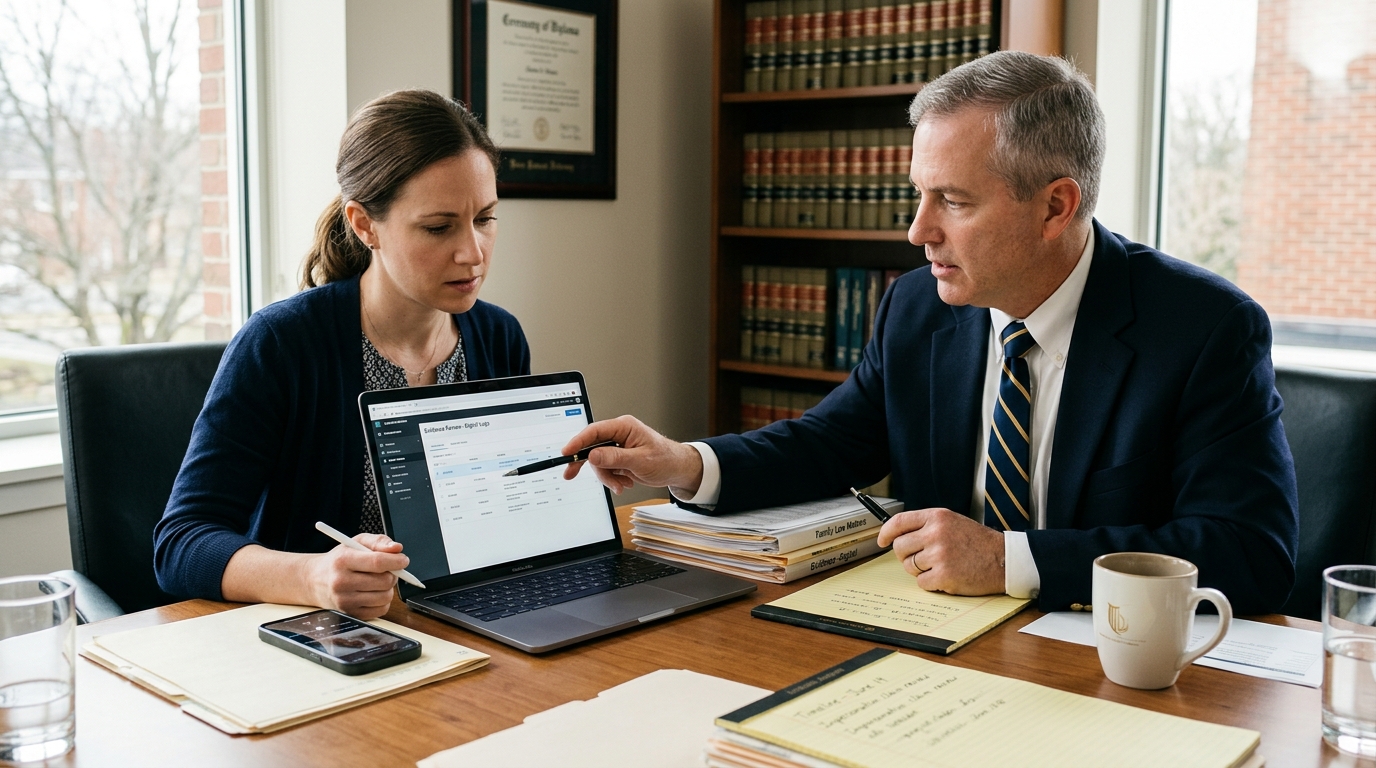
Child custody decisions generally focus on the child’s best interests under state law. Evidence about safety, caregiving, communication, substance use, threats, domestic violence, or compliance with court orders may therefore become important. A convincing fake recording could distort that analysis if it appears to show conduct that never happened.
The reverse is also dangerous. A parent confronted with a genuine recording may claim that it was AI-generated. Courts must avoid both errors: accepting fabricated evidence and rejecting authentic evidence merely because manipulation is technically possible.
A Dramatic Recording Is Not Automatically Proof
If a video or audio file suddenly appears during a custody dispute, its emotional impact can be immediate. Before treating it as conclusive, the surrounding facts matter. Who created or received the file? Is the original available? Was it downloaded from social media, forwarded through a messaging app, edited, compressed, or enhanced? Are there witnesses who can confirm what happened?
Parents should resist the temptation to repost disputed material publicly or use it to pressure the other parent online. Public accusations can complicate litigation, expose children to conflict, and create additional evidence. Preserve the material and discuss it through appropriate legal channels instead.
AI Can Also Be Used to Harass or Impersonate
Deepfake technology can be part of a broader pattern of technology-facilitated abuse. Someone may impersonate a former partner, fabricate messages, create humiliating images, spoof communications, or use synthetic audio to make another person appear threatening or unstable. These acts may raise issues beyond custody, including harassment, stalking, privacy, protective orders, or criminal law depending on the conduct and jurisdiction.
If safety is a concern, preserve evidence without escalating contact. Save account information, dates, messages, original files, URLs, and screenshots showing where the material appeared. If immediate danger exists, contact appropriate local emergency or support services.
Divorce Disputes May Involve Financial and Personal Evidence
Deepfakes are not limited to custody allegations. Divorce cases can involve disputes over assets, spending, hidden accounts, business interests, infidelity allegations, threats, and settlement communications. Fabricated audio or messages could be used to create leverage even if the material never reaches trial.
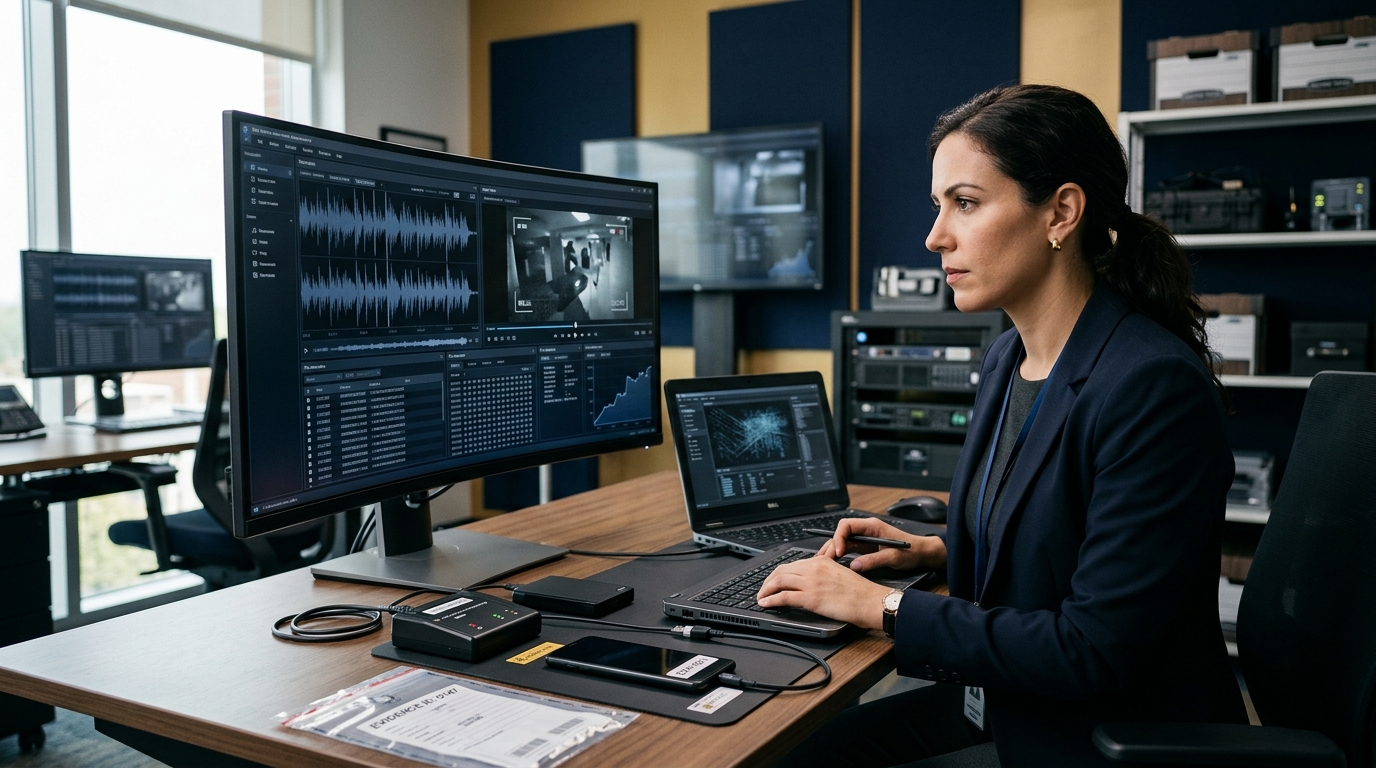
That is one reason lawyers increasingly treat important digital media as evidence that may require verification rather than as something that can be trusted solely because it looks realistic. A suspicious recording may need to be compared with original device data, metadata, account history, witness testimony, or forensic analysis.
Preserve Originals Before Editing or Forwarding
When possible, keep the original file and the device or account from which it came. Forwarding a video, converting its format, cropping an image, applying filters, or repeatedly uploading and downloading media can remove or change useful technical information. A screenshot may preserve what appeared on a screen but may not contain the same metadata as the source material.
Create a simple record of when you received the evidence, from whom, where it was stored, and what you did with it. Do not alter a file to “make it clearer” without preserving the original. If a lawyer or forensic professional later needs to evaluate authenticity, that history can become important.
How Families Can Respond to Disputed AI Evidence
The safest response to questionable media is usually specific and evidence-based. Saying “AI can fake anything” is not the same as showing that a particular file may have been manipulated. Likewise, a realistic-looking recording should not be assumed genuine without considering its source and context.
The National Center for State Courts advises judges and litigants to distinguish between acknowledged AI-generated evidence—where AI use is disclosed—and allegedly manipulated evidence, where one party challenges authenticity. That distinction is useful in family court because AI may be used innocently to enhance or organize material as well as deceptively to fabricate it.
Focus on Authentication, Preservation, and Local Procedure
Authentication generally means showing that evidence is what the offering party claims it is. Depending on the jurisdiction and type of evidence, that may be established through a witness with knowledge, technical characteristics, records from a device or platform, chain-of-custody evidence, or expert testimony.
When manipulation is genuinely suspected, digital-forensics professionals may examine metadata, file structure, compression artifacts, audio characteristics, editing history, device records, or other indicators. No single “deepfake detector” should automatically be treated as infallible. Detection technology changes quickly, and results need to be understood in context.
Talk to Your Lawyer Before Making a Deepfake Accusation
An unsupported accusation can distract from stronger issues in a family-law case. Before alleging fabrication, identify why the material seems questionable. Is there an inconsistency in time or location? Does the original file not exist? Does the audio conflict with known communications? Is there evidence that an account was compromised or that someone had access to voice-cloning material?
A lawyer can determine whether the issue should be raised through discovery, an evidentiary objection, expert review, a motion, or another local procedure. Family courts differ, so strategies that make sense in one jurisdiction may not be appropriate in another.
For judicial guidance on evaluating AI-generated or AI-altered material, review the National Center for State Courts guidance on AI-generated evidence. It discusses authenticity, reliability, transparency, and the need to evaluate how AI affected an evidentiary item.
Readers can explore the Family Law category and the broader Legal Topics hub for additional educational material. If your dispute involves digital evidence more generally, see AI Evidence in Criminal Courts in 2026: Can Deepfakes and Algorithms Be Challenged?. Business owners and professionals using AI may also find 2026 State Privacy and AI Laws: What Small Businesses Need to Know useful.
For location-specific information, visit City Legal Guides. You can also review Legal Resources or use the Directory when researching local legal professionals.
The practical lesson for families in 2026 is not to distrust every digital file. It is to treat important digital evidence carefully. Preserve originals, document where material came from, avoid unnecessary editing, and raise authenticity concerns based on facts rather than speculation. Courts have dealt with forged and altered evidence for generations; AI makes fabrication easier and more convincing, but the core questions remain familiar: What is this item, where did it come from, and why should the court trust it?